Geological Seconds, 2026
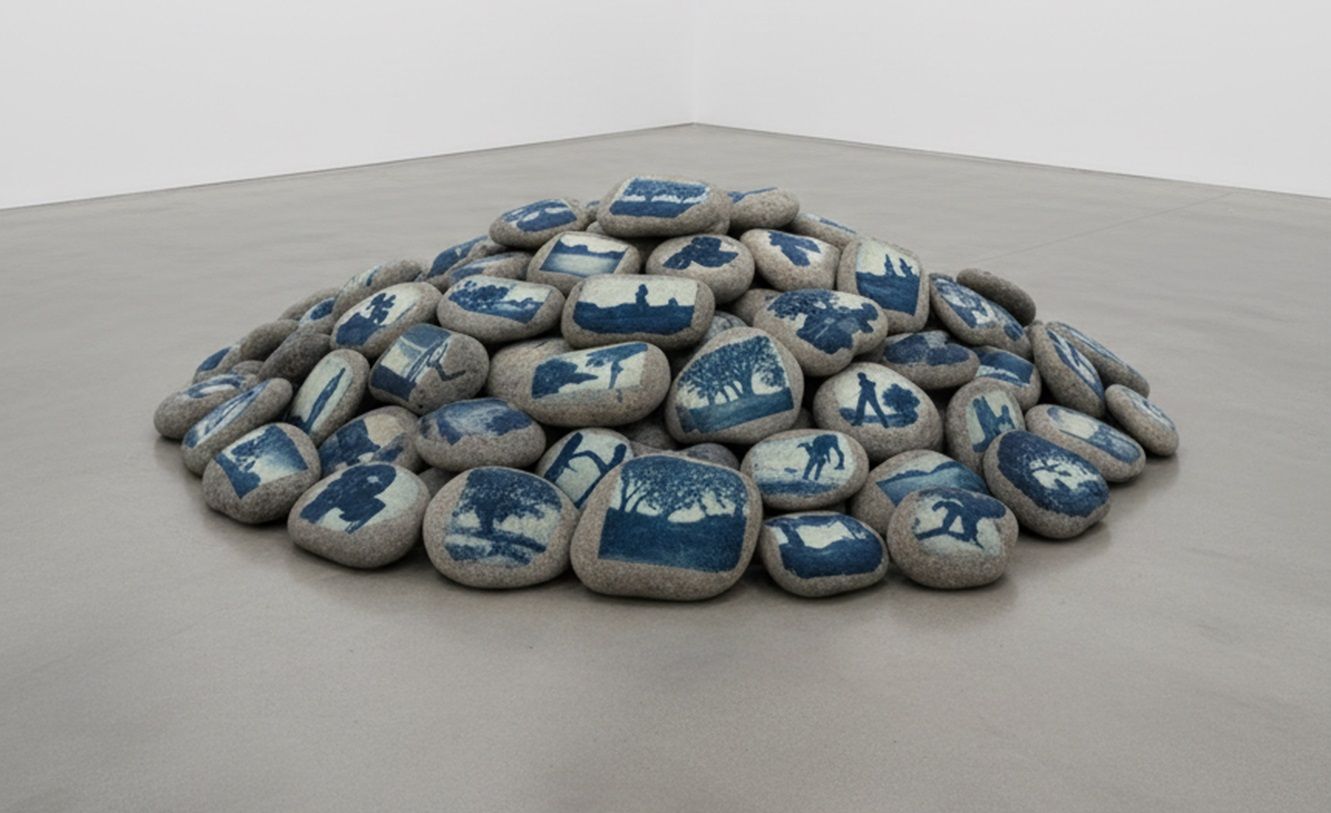
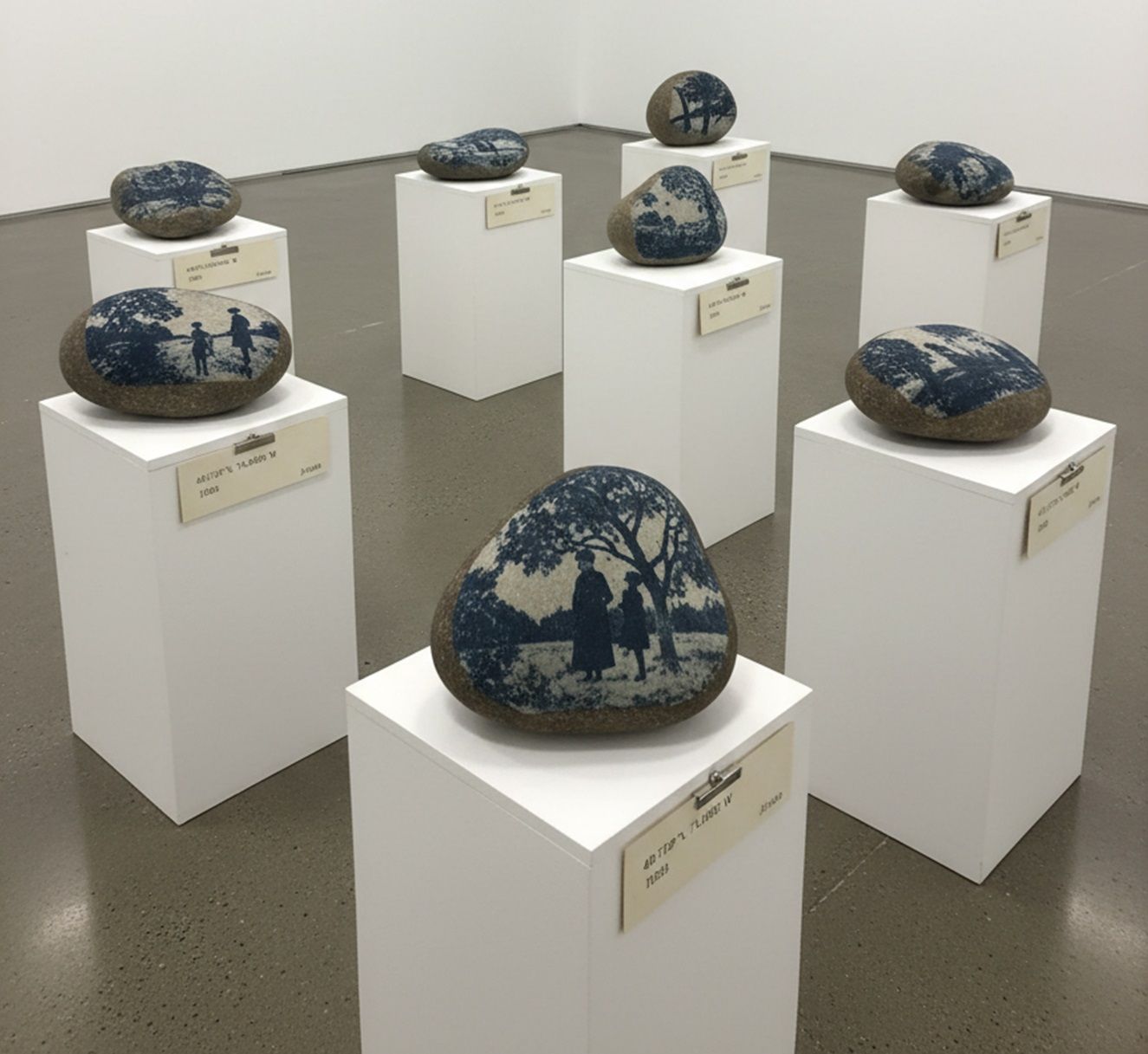
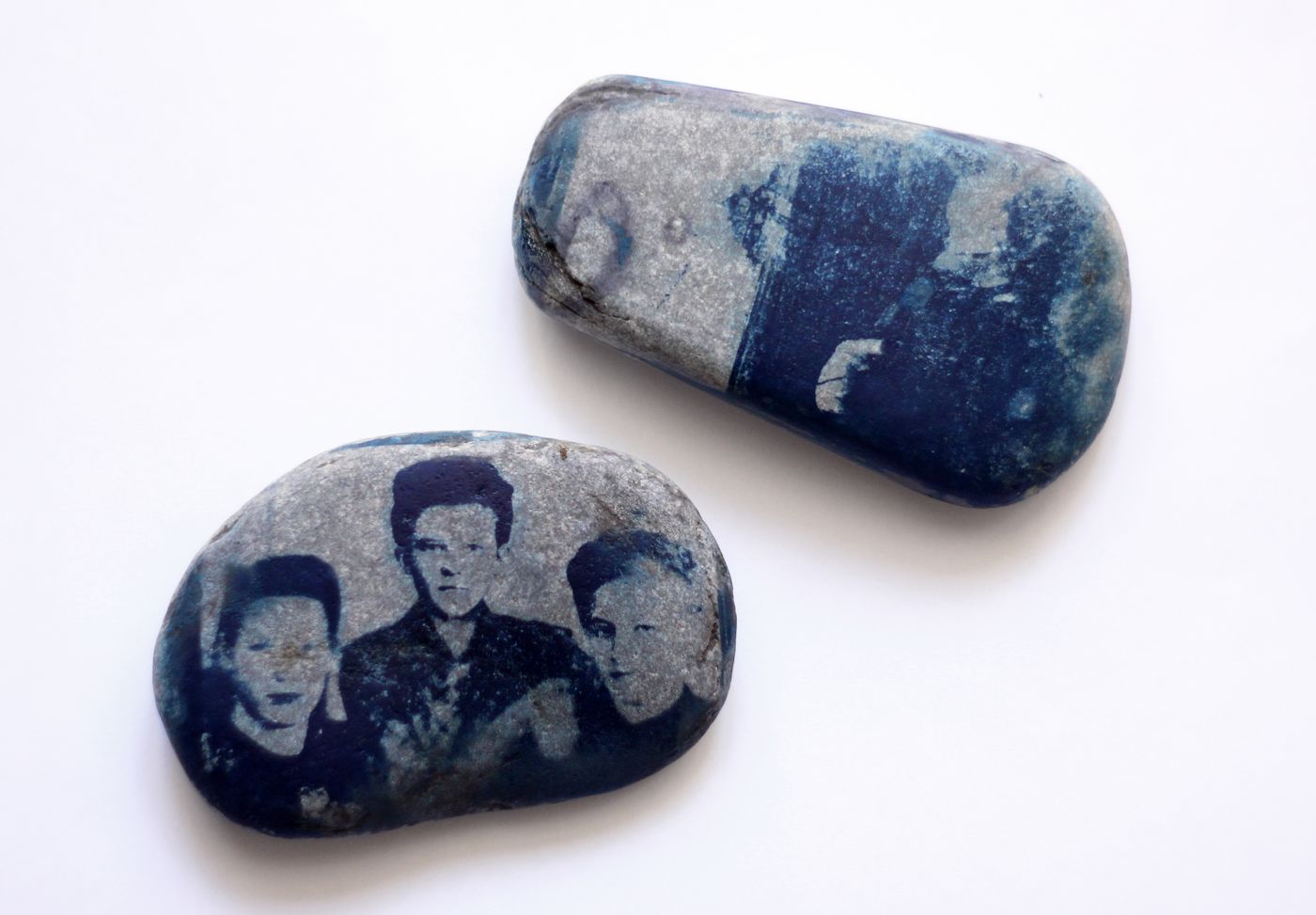
Digital visualisation of the project (left); material trial, cyanotype on stone (right).
Geological Seconds is an installation about the disproportion between human and geological time: the fraction of a second in which a photograph is taken ends up imprinted, in cyanotype, onto a stone that has existed for millennia. In a single room the work stages two registers. Hundreds of fleeting, all-but-disposable images — the kind taken by the dozen each day and almost never looked at again — are printed on stones and heaped like scree; rare archival photographs sit on individual stones on pedestals, like museum pieces. This unsettles our habitual sense of which moment is worth what. The work does not answer what ultimately preserves time — the human image or matter itself — but leaves that question to the viewer. For a given venue the selection is adapted site-specifically, with an archive tied to the place and stones gathered there.
Read more
Geological Seconds is an installation about the disproportion between two regimes of time: the human, measured in fractions of a second, and the geological, measured in millennia. Photographs are transferred, in cyanotype, directly onto stones: the instant in which a shot is taken ends up imprinted on matter that existed long before the frame.
In a single space the work stages two registers of handling the image. Hundreds of fleeting, all-but-disposable shots — the kind taken by the dozen each day and almost never revisited — are printed on stones and heaped like scree: a stream of images that has acquired weight and cannot be deleted. Rare archival photographs sit on individual stones on pedestals, with museum labels, like valuable exhibits. The same gesture — transfer onto stone — confers opposite statuses: the disposable becomes heavy and permanent, the singular becomes museal. The work unsettles the habitual sense of which moment is worth what.
In a site-specific realization, this question is bound to a particular place: the archival images are drawn from the history of the venue itself, and the stones are gathered there. The human history of a place turns out to be a thin, recent layer on rock that is millennia older.
Cyanotype is light-sensitive and fades over time — the image on the stone is more perishable than the stone itself. Yet the work does not turn this into an answer: the act of transfer and the pedestal are themselves an effort to preserve, an admission that the moment was worth something. Which will prevail — the perishability of the image or the stubbornness of holding onto it, the human gaze or indifferent matter — Geological Seconds does not decide, but holds open as a question, leaving the viewer inside the disproportion.